
Reviewed · WALKING TOURS
Kampala guided walking tour
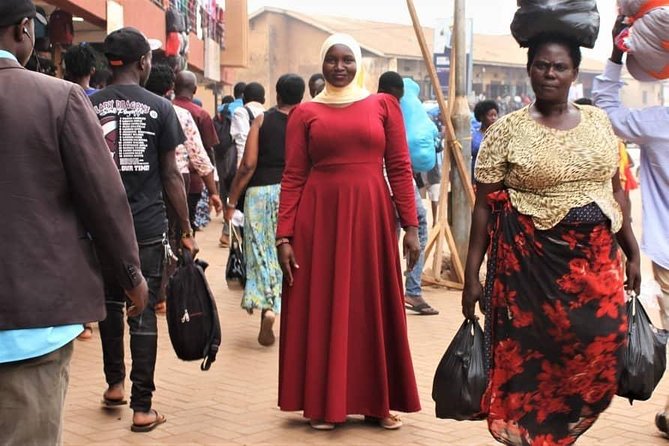
Kampala makes the most sense on foot, where a mosque minaret, royal palace, food market, taxi park, and craft stalls all fit into one busy city day. This four-hour walking tour gives you a clear route through places that can feel confusing on your own, with Fatuma often serving as the guide.
I like the way the tour puts daily Kampala life beside major sights. I also like the patient, flexible guiding: Fatuma has helped visitors find cash and stamps, answered questions about Ugandan culture, and kept the pace comfortable. The main drawback is that you pay separately to enter Gaddafi National Mosque and Kabaka’s Palace, so the $35 price is not the complete cost.
What makes this walk worth considering
- Begin at the Uganda National Mosque: Pay the mosque entry fee, follow the Islamic dress code, and climb the minaret for one of Kampala’s best city views.
- See Kampala’s markets with help: Owino and Nakasero can be hard to navigate alone, but a local guide helps you understand what you are seeing.
- Move through the city like a resident: The Old Taxi Park shows how shared cars work as everyday public transport.
- Connect Uganda’s past to its present: Kabaka’s Palace, the independence monument, and the Sir Edward Muteesa monument add political and royal context.
- Make room for local tastes and shopping: You may stop for a rolex, local food, coffee, spices, or crafts, depending on your interests and available time.
A four-hour introduction to Kampala on foot
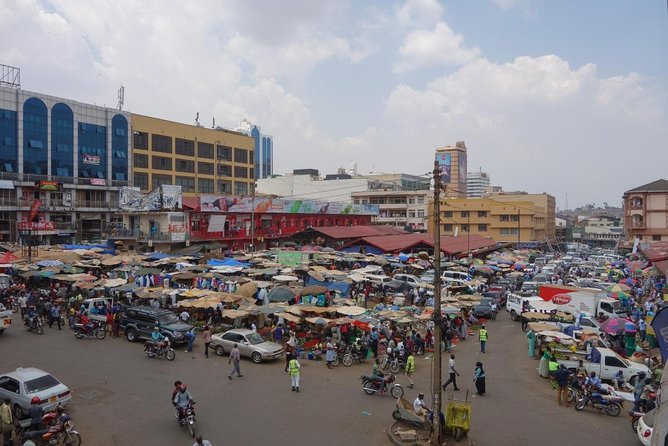
This is not a polished sightseeing circuit with quiet lanes and neatly spaced monuments. Kampala is noisy, active, crowded in places, and full of ordinary business. That is the point.
For $35 per person, you get a four-hour English-language guided walk through several central districts and landmarks. The value comes less from admission to major attractions, since two important entry fees are extra, and more from having someone help you read the city.
A guide can explain what a building means, show you where people actually shop and commute, and lead you through markets that may feel impenetrable at first. The route also gives you a useful first look at Ugandan religion, royalty, politics, transport, food, and crafts in one outing.
The tour begins at Uganda National Mosque, also called Gaddafi National Mosque, and ends at Bagala Craft Market. The supplied location information names Mityana District, but the meeting point and every listed stop are in Kampala. Confirm the exact meeting details when booking, especially if you are staying outside Kampala.
Other guided walks around Kampala:
- Kampala’s Best Experience walking tour
★ 5.0 · 137 reviews - Kampala Walking City Tours (Women Guided)
★ 5.0 · 115 reviews - Kampala Walking Tour (3 Hours) with Optional Gaddafi Mosque Visit
★ 5.0 · 112 reviews
Starting at Uganda National Mosque
Meet your guide at the main entrance of Uganda National Mosque. You must pay the mosque admission fee separately, and visitors change into the required Islamic dress before entering.
Inside, the guide explains the mosque’s story and its place in Kampala. The highlight is the minaret. Climbing it gives you a broad view over the city, which helps you understand Kampala’s spread before you continue on foot.
This first stop does more than provide a good photograph. From above, the city’s uneven form becomes easier to grasp. The minaret also gives the walk a strong beginning, moving you from a formal religious site into the streets, markets, and transport hubs below.
Plan for respectful clothing and follow the dress requirements given at the mosque. The separate entrance fee is one of the costs to add to your budget.
Kabaka’s Palace and the Buganda story
Next comes Kabaka’s Palace, another stop with a separate admission charge. The palace tour is guided, so you get more than a quick look at the grounds.
The palace connects Kampala to the Buganda Kingdom and its royal traditions. It also adds a different layer to the mosque visit. Instead of looking only at modern city life, you begin to see how religion, monarchy, and national politics have shaped Uganda.
The visit takes place within a packed walking route, so your time here may feel shorter than on a palace-only tour. Still, it is an important stop for anyone who wants more context than a market walk can provide. If royal history is your main interest, you may want to ask the guide how much time is available at the palace.
Owino Market, where Kampala gets practical
Owino Market is one of the most memorable parts of the route. It is described as Kampala’s largest market, with food and second-hand goods sold side by side.
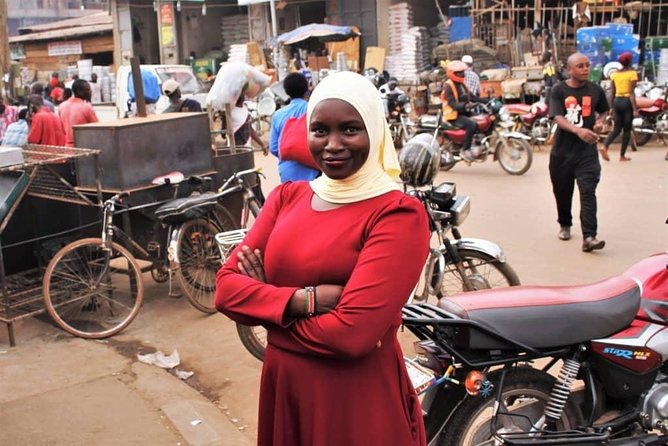
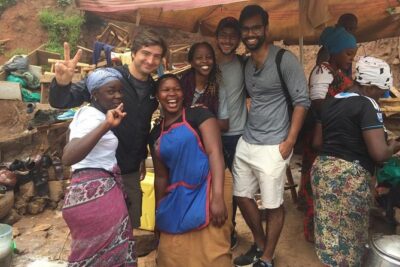
This is where having Fatuma or another local guide matters most. Market lanes can be difficult to read when you do not know the area, and a guide can help you move through them without wasting time or losing your bearings. You see the working side of Kampala here, not a display arranged for sightseeing.
Expect a sensory stop. There may be food, clothing, household goods, and used items around you. The market is not a quiet museum, and you should keep your belongings secure and stay close to the guide.
Admission to Owino Market is included. That helps the $35 price, though the value still depends on how much you want a street-level look at local commerce. If you prefer calm, polished attractions, this may feel intense. If you want to see how people shop and earn a living, it is one of the strongest parts of the walk.
More trips that include a guide, around Kampala:
- 3 Hours Guided Cycling Tour Across Lake Victoria
★ 5.0 · 151 reviews - Inside Kampala Walking Tour (Female Guided)
★ 5.0 · 52 reviews - Kampala: City Guided walking sightseeing Tour
★ 4.7 · 52 reviews - Inside Kampala walking tour (Female guided)
★ 5.0 · 40 reviews
The Old Taxi Park and everyday transport
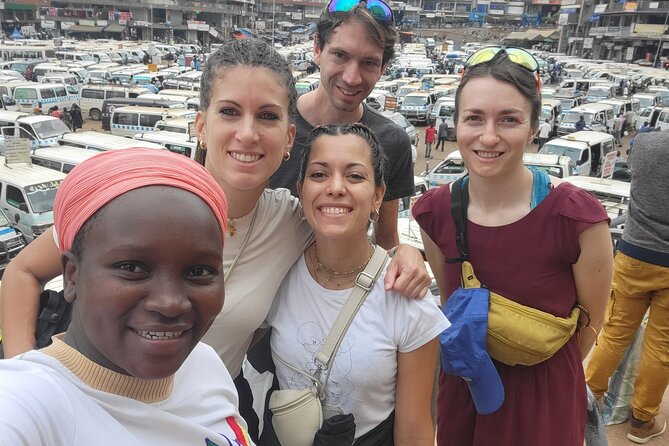
The Old Taxi Park shows Kampala’s public transport system in action. People board shared cars here, making it a useful place to understand how residents get around the city.
A guided stop is especially helpful because transport hubs can be confusing when you do not know the local system. Rather than simply passing through, you can ask what you are seeing and how the cars function as everyday transport.
This is not a conventional attraction with a grand entrance or formal exhibit. Its value is practical. You are seeing a working part of Kampala rather than a place prepared for visitors.
Admission to the Old Taxi Park is included. Take care around traffic and moving vehicles, and listen to the guide’s directions. The tour is designed to help you maneuver through the city, but it remains a city walk, not a protected pedestrian route.
A possible stop for rolex, coffee, or local food
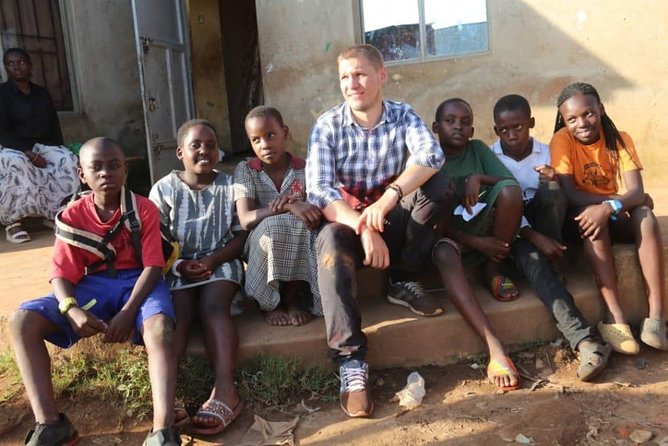
The route may include a restaurant stop if you want one. You can try local food, eat a rolex, or have coffee while taking in the city from a balcony.
A rolex is a popular Ugandan street food made with chapati and egg. The information provided does not promise that food or drinks are included, so treat this as an optional purchase at your own cost.
This pause can be useful after the markets and taxi park. It gives you a chance to sit, ask questions, and decide how you want to use the remaining time. If you would rather keep moving, tell the guide. One of the tour’s strengths is its flexible pace.
Hindu temple and Nakasero Market
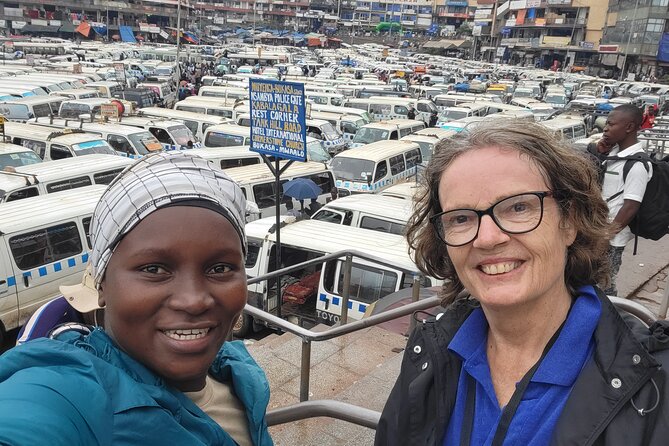
The Hindu temple introduces another part of Kampala’s religious life. The guide explains Hinduism and how it arrived in Uganda, giving you a chance to compare this tradition with the earlier mosque visit.
The stop is valuable because the walk is not limited to one faith or one version of Ugandan identity. It presents Kampala as a city shaped by several communities and traditions.
Nakasero Market follows, with a focus on food and spices. If you want to buy spices, this is the place to ask about shopping. The market admission is included.
Nakasero provides a different market experience from Owino. Owino is known for food and second-hand goods, while Nakasero is especially useful if you are interested in produce, ingredients, and the practical side of cooking. You may want to leave room in your bag, though the tour does not specify which spices or products will be available on the day.
Monuments that explain Uganda’s national story
The tour then turns to several monuments. The Sir Edward Muteesa monument honors Uganda’s first president, and the guide explains why it was placed there.
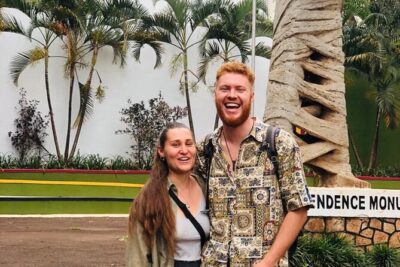
Next comes the Independence Monument, where you learn about Uganda’s road to independence. Admission to the monument is included.
These stops can be easy to overlook if you are walking alone. A monument often means little until someone explains the person or event behind it. Here, the guide connects the physical city to national politics and the country’s transition into independence.
The route also includes the Impala Monument, which explains the origin of Kampala’s name, and a gorilla monument representing one of Uganda’s main attractions. Uganda has ten national parks that can be visited, and the gorilla monument points to the importance of that wildlife heritage.
The monuments are brief, focused stops rather than long museum visits. That suits a four-hour route, but you should not expect an in-depth political history course. You get a useful introduction, with the option to ask questions as you walk.
National Theatre and five royal kingdoms
The National Theatre is described as Uganda’s oldest theatre. It also displays portraits of the kings of Uganda’s five main kingdoms.
That makes it a strong cultural stop near the end of the route. After seeing the mosque, palace, markets, transport park, and national monuments, you get another look at Uganda through performance and royal identity.
The theatre is not simply a photo stop. The portraits give the guide a chance to explain how kingdoms remain part of the country’s story. Ask questions here if you want to connect Kabaka’s Palace with the wider royal structure mentioned during the walk.
As with several locations, the supplied details do not promise a performance or interior access beyond the described visit. Think of it as a cultural and historical stop within the walking route.
Finishing at Bagala Craft Market
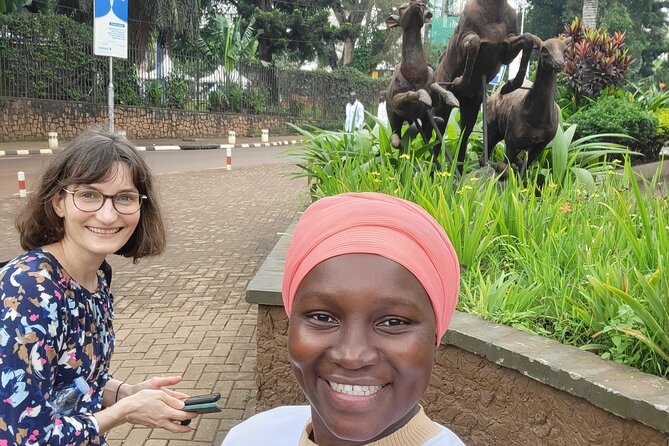
The walk ends at Bagala Craft Market, where you can shop for souvenirs. Admission is included, but purchases are not.
Ending here makes practical sense. You can browse after the guide has introduced you to Kampala’s history and daily life, then choose a small reminder of the city. Craft markets are also a chance to ask about materials, designs, and prices before buying.
Do not leave shopping until the last minute if you have a tight onward schedule. The tour ends at the craft market, and the time available for browsing depends on the pace of the earlier stops.
What Fatuma adds to the experience
The strongest pattern in the available feedback is praise for Fatuma’s manner. She is described as friendly, patient, flexible, and careful about safety. She has also adjusted the walk to practical needs, including helping one visitor find cash and stamps.
That is useful in Kampala. A walking tour can provide facts, but a good guide also helps you handle the city. Fatuma has been praised for leading people through the markets, explaining local life, and answering questions about Uganda’s people, culture, and past.
The walk is presented in English. If you want extra time at one market, a monument, or the food stop, say so early. The route includes many locations, and a four-hour schedule requires sensible pacing.
Is $35 a fair price?
At $35 per person, the tour is reasonably priced if you want a guided introduction rather than a simple list of landmarks. The fee covers the guide’s time and access to the included stops, such as Owino Market, the Old Taxi Park, Nakasero Market, the Independence Monument, and Bagala Craft Market.
The mosque and Kabaka’s Palace are not included. Add those admission fees, plus any food, coffee, spices, or crafts you buy. The final cost will therefore be higher than $35.
Even so, the fee can be worthwhile for a first day in Kampala. You get help with orientation, market navigation, cultural context, and safety in a route that would be difficult to organize efficiently on your own.
Who should book this Kampala walk?
I would choose this tour if you want to see ordinary city life alongside major landmarks. It suits first-time visitors, curious walkers, and anyone who wants markets, religion, royal history, national monuments, and shopping in one half-day.
It is also a good match if you prefer a guide who can respond to your interests. The walk is not designed as a fixed, silent march. You can ask questions, request a food or coffee stop, and explain if you need help with a practical errand.
You may want a different experience if you dislike crowded markets, busy transport areas, or walking between many varied stops. The route covers a lot, so it is better for a broad first look than for slow, detailed study of one attraction.
Cancellation is free up to 24 hours before the tour, and you can reserve now and pay later. Starting times depend on availability.
Should you book it?
Book this walk if you want Kampala explained from street level. The mosque minaret, Owino Market, the Old Taxi Park, Nakasero Market, and Bagala Craft Market give you the city’s daily rhythm, while Kabaka’s Palace and the monuments add political and cultural context.
The best reason to choose it is the guide’s role. Fatuma’s patient, flexible approach can make a major difference in places that are difficult to understand alone. Just budget for the two separate admission fees, wear practical walking clothes, and expect an active city rather than a quiet sightseeing route.
FAQ
Where does the Kampala walking tour begin?
The tour begins at Uganda National Mosque, also known as Gaddafi National Mosque.
Where does the tour end?
The tour ends at Bagala Craft Market.
How long does the tour last?
The tour lasts four hours.
What language is the tour offered in?
The live tour guide speaks English.
Is admission to Gaddafi National Mosque included?
No. Admission to Gaddafi National Mosque is not included, and you must pay the entry fee separately.
Is admission to Kabaka’s Palace included?
No. Admission to Kabaka’s Palace is not included, and you must pay separately for the palace tour.
Which market visits are included?
The route includes Owino Market, Nakasero Market, and Bagala Craft Market. Admission to these markets is included.
Is the Old Taxi Park included?
Yes. The Old Taxi Park is included in the walking route, and its admission is included.
Can I buy food or coffee during the tour?
An optional stop may be made at a restaurant for local food, a rolex, or coffee. The cost of food and drinks is not included.
Can I cancel the booking?
Yes. You can cancel up to 24 hours in advance for a full refund. You can also reserve now and pay later.
Just added around Kampala
- KAMPALA MOTOR BIKE TOURS (boda boda tours)★ 4.5 · 6 reviews
- 1 Day Best Mabamba Swamp Shoebill Birding Tour, Lake Victoria★ 5.0 · 6 reviews
- 3 Days Lake Bunyonyi and Gorilla Trekking Tour in Uganda★ 5.0 · 5 reviews
- 4 Day Uganda Gorilla Trekking Safari with Lake Bunyonyi★ 5.0 · 5 reviews
- Private Ugandan Food Cooking Class and Culture Experience★ 5.0 · 6 reviews
- 3-Day Gorilla Trekking Bunyonyi Mist Relaxation Safari★ 5.0 · 5 reviews
- Mountain Rwenzori Trekking Uganda 9 Day Safari★ 4.5 · 3 reviews
- Rwenzori Mountains Trekking with Margherita Peak Summit★ 5.0 · 13 reviews
Walking Tours, compared.
Kampala Walking Tour (3 Hours) with Optional Gaddafi Mosque Visit
Read our review →
Steve Kampala Walking tours (Airpals Safaris tour)
Read our review →

Entebbe Walking Tour (3 Hours) with Zoo and Botanical Gardens Options
Read our review →Browse the lists this tour appears in